
 tradeportx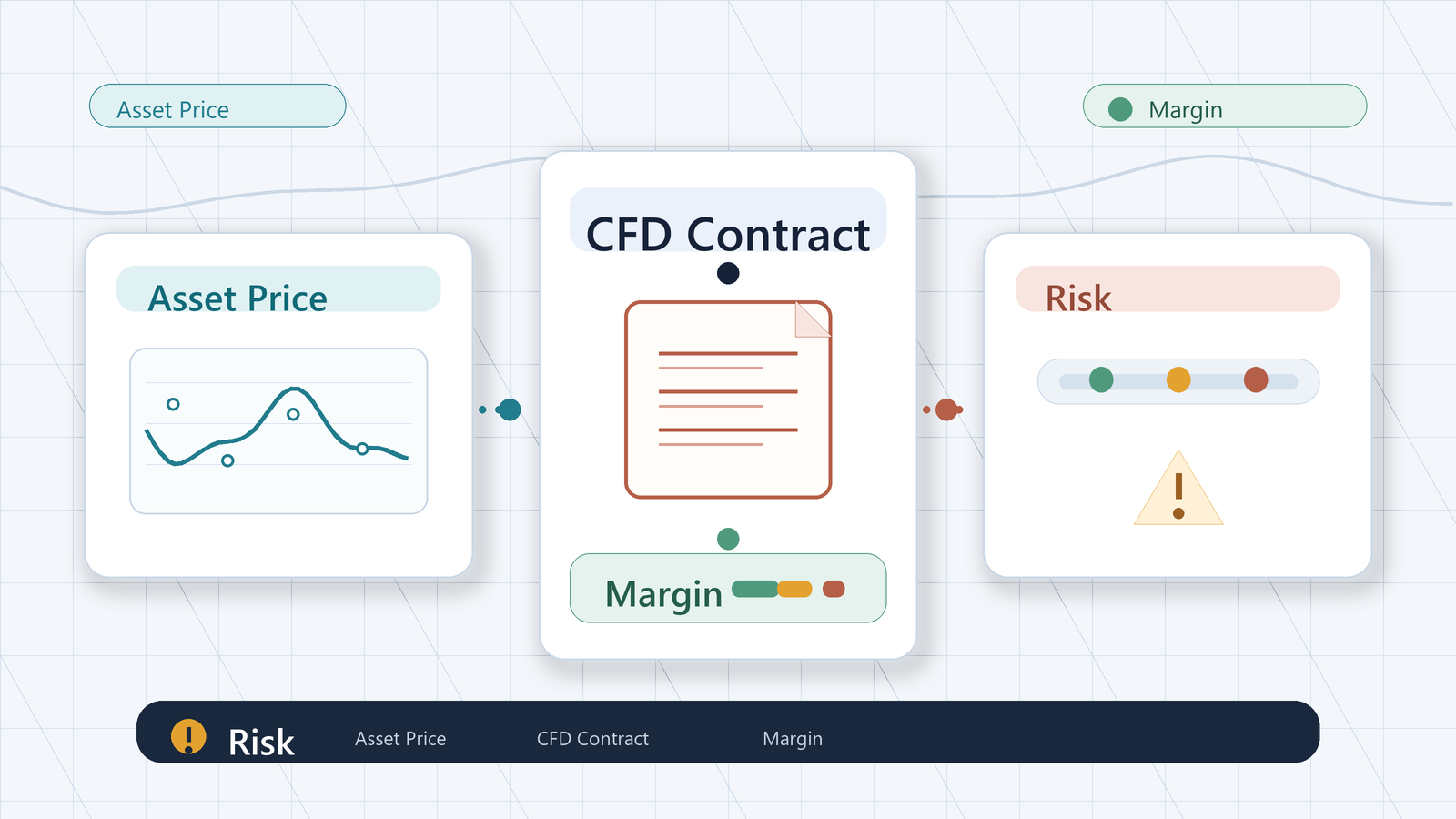
Focus Keyphrase: what is cfd trading
Last updated: August 5, 2026
Target market: International English, with UK, Australia, Singapore and US availability notes
What is CFD trading? CFD trading means using a Contract for Difference to speculate on the price movement of an asset without owning the underlying asset. A CFD can track markets such as shares, indices, currencies, commodities or crypto-related instruments, depending on the provider and local rules. The important beginner point is that a CFD is a derivative contract. It can use margin and leverage, so losses can grow quickly compared with the money placed as margin.
Risk warning: Contracts for Difference (CFDs) are complex, leveraged products and are not suitable for all retail investors. This guide is for education only and does not provide investment advice, trading signals or a recommendation to trade CFDs.
This page is a beginner learning hub for CFD basics. If you are new, use it to understand the product structure before comparing CFD vs stocks, checking whether you can trade CFDs with $100, or deciding whether CFD trading is worth it for beginners.
What Is CFD Trading Quick Facts
| Question | Short Answer |
|---|---|
| What is CFD trading? | CFD trading is contract-based price exposure without owning the underlying asset. |
| Do CFD traders own the asset? | Usually no. A CFD position normally tracks price movement through a contract with a provider. |
| Why do CFDs use margin? | Margin is collateral required to open or maintain a leveraged position. |
| Does leverage reduce risk? | No. Leverage can reduce upfront margin, but losses are still linked to the full exposure. |
| What costs matter? | Spread, commission, overnight financing, currency conversion, data fees and slippage can all matter. |
| Is this a US CFD trading guide? | No. US readers should treat this as educational only because stock-based CFDs may fall under the US security-based swap framework. |
What Is CFD Trading in Plain English?
A Contract for Difference is an agreement where the profit or loss depends on the price difference between opening and closing a position. If the price moves in your favor, the CFD position may show a gain. If the price moves against you, the position may show a loss.
The key point is that the trader is not usually buying the underlying asset. A stock CFD is not the same as owning company shares. A gold CFD is not the same as owning physical gold. An index CFD is not the same as owning every company in the index. The CFD is a separate contract that references the asset price.
That contract structure changes the risk:
- you may not receive normal ownership rights
- margin may be required
- leverage may increase market exposure
- overnight financing may apply
- the provider’s terms define many practical details
- local regulation can affect availability and protections
For a beginner, the first learning test is simple: can you explain the difference between owning the asset and taking CFD price exposure? If not, stay in learning mode.
How CFD Trading Works
A CFD trade usually begins with choosing an underlying market, selecting a direction, and deciding position size. A long CFD position is designed to gain if the referenced price rises. A short CFD position is designed to gain if the referenced price falls.
That sounds simple, but the mechanics are more complex than a normal cash purchase of shares.
With a direct stock purchase, a beginner usually pays the full value of the shares in a cash account. With a CFD, the provider may require only a margin amount. The account may control a larger exposure than the money placed as margin.
That is why CFD trading should not be judged only by the deposit or margin number. The more important question is the full exposure:
How much market value does this position actually represent?
If a beginner cannot answer that question, the position is not understood well enough.
What Are Margin and Leverage in CFD Trading?
Margin is collateral. It is the amount required to open or maintain a CFD position. It is not automatically the maximum possible loss in every situation.
Leverage means the position’s market exposure can be larger than the margin placed in the account. For example, if a CFD requires 20% margin, a $1,000 exposure may require about $200 of margin before costs. The account is not simply risking $200 in a clean, isolated way. The profit and loss still move with the $1,000 exposure.
This is the beginner mistake to avoid:
Low margin does not mean low risk.
If the market moves against the position, account equity can fall quickly. The provider may issue a margin call, restrict activity, or close positions if the account no longer meets margin requirements. Some regulated retail regimes include protections such as leverage limits, margin close-out rules or negative balance protection, but those protections do not make CFDs safe or suitable for every user.
CFD Trading Costs Beginners Should Check
The cost of CFD trading depends on the product, provider, account type, market and holding period. A beginner should never assume CFDs are cheap without checking the actual product specification.
Common CFD costs may include:
- bid-ask spread
- commission, especially on some share CFDs
- overnight financing for positions held after the daily cut-off
- currency conversion
- market data or platform fees
- slippage during fast markets
- charges for certain risk-management features, depending on provider terms
The holding period matters. A very short trade may be sensitive to spread and commission. A multi-day position may be more sensitive to overnight financing. A position in a different currency may add conversion cost.
Before using real money, a beginner should find the provider’s product specification and fee schedule. If those pages are unclear, the product is not yet clear enough to trade.
CFD Trading vs Stock Trading
Many beginners first understand CFDs by comparing them with stocks.
The main difference is ownership. Stocks usually represent ownership of company shares. Stock CFDs usually provide price exposure without owning the underlying shares. That affects shareholder rights, dividend treatment, leverage, costs, regulation and risk.
For the full comparison, read CFD vs stocks. The short version is:
| Dimension | Direct Stocks | Stock CFDs |
|---|---|---|
| Ownership | Usually ownership of company shares | Usually no ownership of the underlying shares |
| Product type | Share or security | Derivative contract |
| Upfront capital | Often full position value in a cash account | Usually margin-based |
| Leverage | Usually no leverage in a simple cash account | Commonly leveraged |
| Holding style | Often used for ownership or long-term investing | Often used for shorter-term price exposure |
| Main extra risk | Market and company risk | Market risk plus leverage, margin, financing and provider terms |
This does not mean stocks are risk-free. Stocks can fall sharply. But CFDs add more moving parts, so beginners need a stronger risk checklist.
Can Beginners Trade CFDs With a Small Account?
Some platforms or products may allow small deposits, but a small deposit does not mean the account has enough risk buffer.
The better question is not only whether a platform accepts $100. The better question is what $100 has to cover after the account is funded:
- minimum trade size
- margin requirement
- spread
- commission
- overnight financing
- currency conversion
- slippage
- normal price movement
- margin close-out rules
For the detailed small-account explanation, read Can you trade CFDs with $100.
The practical beginner lesson is this: possible is not the same as suitable. If the minimum position creates too much exposure, a small account can become fragile very quickly.
Is CFD Trading Worth It for Beginners?
CFDs may be worth learning because they teach leverage, margin, short exposure, product specifications and risk controls. That does not mean they are automatically worth trading with real money.
For many beginners, the better first step is education, followed by demo practice. Demo trading cannot copy every real-money condition, but it can help a user understand order entry, margin movement, unrealized profit and loss, spreads and close-out mechanics.
For the broader decision framework, read Is CFD trading worth it for beginners.
The most useful beginner rule is:
Do not trade a leveraged product you cannot explain in plain language.
Region Notes: UK, Australia, Singapore and US
CFD rules and availability differ by location. This guide is written for international education and does not describe a trading offer in any specific country.
| Region | Beginner Framing | Compliance Note |
|---|---|---|
| UK | CFDs are available through regulated providers but treated as high-risk retail products. | FCA materials describe retail CFD protections such as leverage limits, margin close-out, negative balance protection and risk warnings. |
| Australia | Retail CFDs are available under product intervention rules. | ASIC applies leverage limits and other retail protections. |
| Singapore | CFDs are treated as complex products. | MoneySense explains margin, margin calls, financing costs and customer knowledge assessment context. |
| US | Treat this as education only, not a US CFD trading guide. | Stock-based CFDs may implicate the US security-based swap framework. |
If you are in a jurisdiction where CFDs are restricted or unavailable, do not treat international CFD education as a sign that the product is available to you.
CFD Trading Beginner Learning Path
Use this hub as a sequence, not as a shortcut to live trading.
| Step | Learn This First | Next Page |
|---|---|---|
| 1 | What a CFD is and how contract-based exposure works | This page |
| 2 | How CFDs differ from owning shares | CFD vs stocks |
| 3 | Whether a small account has enough room for costs and margin | Can you trade CFDs with $100 |
| 4 | Whether CFD trading is worth learning before real-money use | Is CFD trading worth it for beginners |
| 5 | How margin, leverage, costs and close-outs work in more detail | Future guides on leverage, CFD costs and margin calls |
The goal is not to make CFDs feel simple. The goal is to make the risk structure clear enough that a beginner knows what to study next.
FAQ
What is CFD trading?
CFD trading is using a Contract for Difference to speculate on price movement without usually owning the underlying asset. Profit or loss depends on the difference between opening and closing the CFD position, after costs.
Is CFD trading the same as stock trading?
No. Stock trading usually involves buying or selling shares. Stock CFD trading usually provides price exposure through a derivative contract without owning the underlying shares.
Do you own the asset with CFDs?
Usually no. A CFD normally gives contract-based exposure to price movement, not normal ownership rights in the underlying asset.
Why is CFD trading risky?
CFDs are risky because they commonly use leverage and margin. Losses are linked to the full exposure, and positions may face close-outs, financing costs, spreads and provider-specific terms.
Can beginners trade CFDs?
Beginners can study CFDs, but live CFD trading is complex and high risk. A beginner should understand margin, leverage, costs, close-outs and local availability before considering real money.
Can you trade CFDs with $100?
Possibly on some platforms and products, but $100 is usually a small risk buffer after margin, costs and normal market movement. The minimum deposit is not the same as a suitable starting amount.
Are CFDs good for long-term investing?
Usually not for simple long-term ownership. Overnight financing, leverage and contract structure can make CFDs unsuitable for beginners who want to buy and hold assets.
Is CFD trading available in the US?
US readers should be cautious. Stock-based CFDs may fall under the US security-based swap framework, and this guide should not be treated as a US CFD trading offer.
CFD Trading Risk Warning and Next Step
CFDs are complex, leveraged products. They can involve rapid losses, margin calls, close-outs, overnight financing, spreads, commissions, slippage and provider-specific terms. This page is educational and does not recommend trading CFDs, choosing a platform or taking any market position.
If you are asking “what is CFD trading,” the next step is not to open a live trade. The next step is to check whether you can explain:
- what the contract tracks
- whether you own the underlying asset
- what the full exposure is
- how margin is calculated
- how leverage affects losses
- what costs apply
- when a close-out can happen
- whether CFDs are available in your region
If any answer is unclear, keep learning before using real money.